
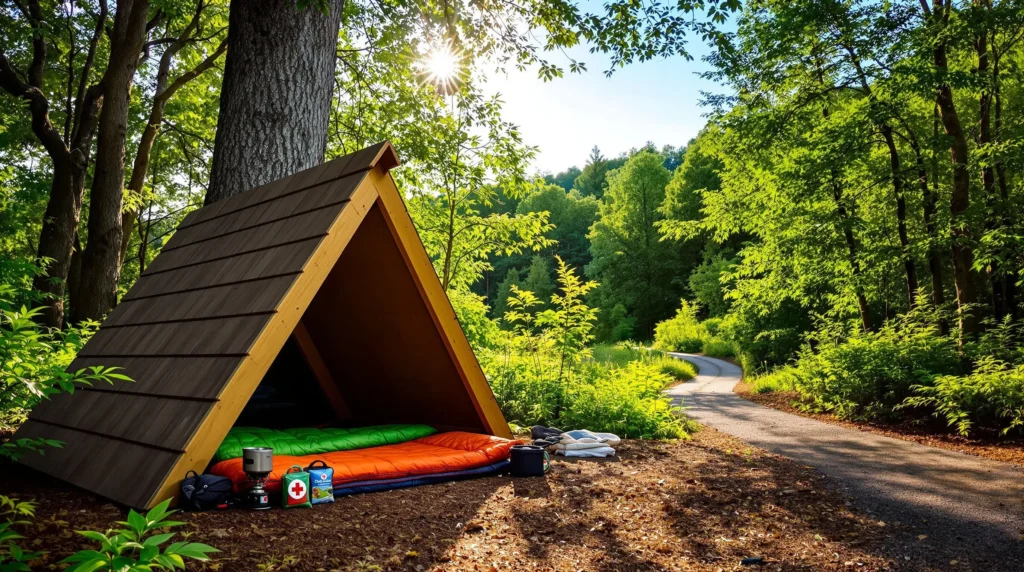
Your boots crunch on pine needles. The air smells like woodsmoke and moss. You’re not in a tent or a fancy cabin—you’re under a lean to, watching the sunrise paint the forest gold. Lean to camping isn’t just a throwback to simpler times. It’s a test of skill, a lesson in comfort, and a shortcut to feeling alive in the wild. If you’ve ever wondered what it’s like to swap nylon walls for open air, this guide to lean to camping is for you.
Table of Contents
What Is Lean To Camping?
Lean to camping means sleeping in a simple, three-sided shelter—usually made of logs or planks—with one side open to the world. Picture a sturdy wooden hut with a slanted roof, tucked into the woods. These shelters dot trails and parks across North America, especially in the Adirondacks and along the Appalachian Trail. Some are ancient, built by the Civilian Conservation Corps in the 1930s. Others are newer, but the idea stays the same: protection from rain and wind, with a front-row seat to nature.
Why Try Lean To Camping?
Here’s the part nobody tells you: lean to camping feels different from tent camping. You hear every owl, every breeze. You wake up with the sun, not a zipper. There’s no plastic wall between you and the world. If you crave a little wildness but want more comfort than a tarp, lean to camping hits the sweet spot.
- Weatherproof, mostly: The roof keeps you dry, and the walls block wind. But you still feel the air—no stuffy tent vibes.
- Room to breathe: Most lean tos sleep 2-8 people. You can stretch out, sit up, and even cook nearby.
- Less gear: No tent to pack or pitch. Just bring your sleeping bag, pad, and maybe a bug net.
- Social: Many lean tos are first-come, first-served. You might share with strangers and swap stories by the fire.
If you love the idea of “almost” sleeping outside, lean to camping is your jam. If you need total privacy or can’t sleep with critters nearby, it might not be for you.
How to Find Lean To Shelters
Not every park or forest has lean tos, but they’re more common than you think. Here’s how to track them down:
- Check state and national park websites. Search for “lean to camping” or “shelters.”
- Look up trail maps for the Adirondacks, Catskills, or the Appalachian Trail. Many list lean to locations.
- Call ranger stations. They know which shelters are open, closed, or need reservations.
- Use apps like AllTrails or Gaia GPS. Filter for shelters or lean tos.
Some lean tos require permits or reservations, especially in busy seasons. Others are free and first-come, first-served. Always check the rules before you go.
What to Pack for Lean To Camping
Here’s where lean to camping gets fun. You can pack lighter than for tent camping, but you still need the right gear. Let’s break it down:
- Sleeping bag: Pick one rated for the coldest night you expect. Lean tos can get drafty.
- Sleeping pad: The floor is usually wood or dirt. A thick pad keeps you warm and comfy.
- Bug net: In summer, mosquitoes love lean tos as much as you do. Hang a net over your sleeping area.
- Tarp: For extra rain protection or to block wind at the open side.
- Headlamp: Lean tos don’t have lights. Bring extra batteries.
- Cooking gear: Most lean tos have a fire ring nearby. Bring a stove if fires aren’t allowed.
- Food and water: There’s no room service. Pack enough for your trip, and check if water sources are nearby.
- Warm clothes: Even in summer, nights can get chilly.
Pro tip: Bring earplugs. Squirrels and mice love lean tos, and they don’t care if you’re trying to sleep.
How to Set Up Your Lean To Camp
Arriving at a lean to feels like finding a secret clubhouse. But there’s an art to making it homey. Here’s how:
- Pick your spot. If the lean to is empty, choose the flattest, driest corner for your sleeping pad.
- Hang your bug net. Use hooks, nails, or string. Make sure it covers your whole sleeping area.
- Lay out your sleeping bag and pad. Keep your gear organized—mice love snacks left out.
- Set up your cooking area outside, near the fire ring. Never cook inside the lean to—smoke and food smells attract animals.
- Store food in a bear canister or hang it from a tree, at least 100 feet from the shelter.
Here’s why this matters: a tidy camp keeps you safe, warm, and less likely to wake up with a mouse in your boot.
Lean To Camping Etiquette
Lean to camping comes with unspoken rules. Break them, and you’ll make enemies fast. Follow them, and you’ll make friends for life.
- Share the space: If others arrive, make room. Lean tos are for everyone.
- Keep it clean: Pack out all trash, even if it’s not yours. Leave the shelter better than you found it.
- Quiet hours: Respect others’ sleep. Save the guitar solos for daylight.
- No graffiti: Carving your name isn’t cool. Take a photo instead.
- Fire safety: Use existing fire rings. Never leave a fire unattended.
If you’ve ever struggled with noisy neighbors or messy campsites, you know how much these little things matter.
Common Mistakes and How to Avoid Them
Everyone messes up their first lean to camping trip. Here are a few classic blunders—and how to dodge them:
- Arriving late: Lean tos fill up fast, especially on weekends. Get there early or have a backup plan (like a tent).
- Forgetting a bug net: Nothing ruins a night like mosquitoes. Always pack one, even in spring or fall.
- Leaving food out: Mice, raccoons, and bears will find it. Store everything in sealed containers.
- Ignoring the weather: Lean tos block rain, but sideways storms can soak your gear. Bring a tarp just in case.
Here’s the truth: you’ll learn more from one night in a lean to than from a dozen YouTube videos. Don’t sweat mistakes—just be ready to adapt.
Who Should Try Lean To Camping?
Lean to camping isn’t for everyone. If you love the idea of waking up to birdsong, sharing stories with strangers, and feeling the wind on your face, you’ll thrive. If you need total privacy, hate bugs, or want a guaranteed spot, you might prefer a tent or cabin. Lean to camping rewards flexibility, curiosity, and a sense of humor.
Next Steps: Your First Lean To Adventure
Ready to try lean to camping? Start small. Pick a spot close to home, pack light, and go with friends. Bring extra snacks, a sense of adventure, and maybe a good ghost story. The first night might feel strange, but by morning, you’ll wonder why you ever zipped yourself into a tent. Lean to camping isn’t just a way to sleep outside—it’s a way to wake up to the world.


 English
  Romanian