
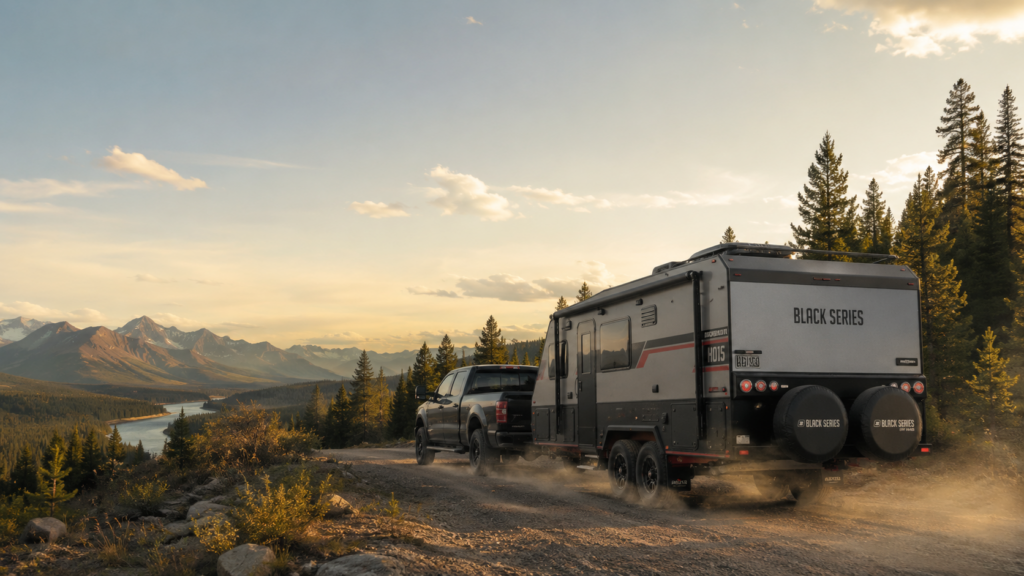
There is a particular kind of freedom in pulling a camper down a gravel forest road, miles from the nearest paved highway, and finding a spot by a river that no day-tripper will ever reach. But that freedom rests entirely on one thing: a truck that can get you there and back without drama.
Towing a loaded camper into the backcountry is a very different job from hauling it across a flat interstate. You are dealing with steep grades, loose surfaces, thin mountain air, and long stretches with no cell signal and no help. The truck setup that handles a weekend at a developed campground is not always the one you want when the campsite is three hours past the last gas station. Here is how to build a rig that earns your trust on the hard trips.
Cuprins
Start With the Right Truck and the Right Numbers
Before anything else, match the truck to the trailer. A three-quarter-ton or one-ton diesel pickup is the sensible starting point for anything heavier than a small pop-up. The diesel engine matters here for one simple reason: torque. Towing up a long grade is a test of low-end pulling power, and a diesel makes its peak torque low in the rev range, right where you need it when the road tilts uphill.
Look at three numbers and respect all of them: the truck’s maximum tow rating, its payload, and the trailer’s loaded weight. People obsess over tow rating and forget payload, then load the bed with firewood, water, and gear plus the trailer’s tongue weight, and suddenly the rear axle is over its limit. Weigh your rig loaded the way you actually travel, not the way the brochure imagines it.
Cooling and Braking: The Parts That Save the Trip
Heat is the enemy on a long mountain pull. Two upgrades pay for themselves the first time you tow a heavy camper over a pass:
- A trailer brake controller: A proportional controller blends the trailer’s brakes with the truck’s so you are not riding the pedal down every descent. On a steep grade with a heavy trailer, this is a safety item, not a luxury.
- A transmission cooler: Towing generates a lot of heat in the transmission fluid, and heat is what kills automatics. An auxiliary cooler keeps fluid temperatures in a safe band on the climbs.
Pair those with good tires rated for the load and a habit of using engine braking on descents, and you have covered the parts of towing that most often go wrong.
Where Engine Tuning Fits In
Once the basics are sorted, a lot of owners look at the engine itself. Factory diesel trucks are built to satisfy a wide range of buyers and a long list of regulations, which means there is usually pulling power and drivability left on the table from the factory.
This is where a quality diesel performance tuner comes in. A well-chosen tow tune sharpens throttle response, can improve how the truck holds a gear on grades, and on many setups helps with fuel economy when you are not towing. The key word is a tow-oriented tune from a reputable source, loaded conservatively. The goal on a backcountry rig is not maximum dyno numbers. It is a truck that pulls cleanly, runs cool, and behaves the same way on trip one hundred as it did on trip one.
A word of caution that applies to all of this: Some engine and exhaust modifications, including the diesel delete kits that the performance community discusses, are intended for off-road, competition, and race-use trucks only. They are not legal for vehicles driven on public roads in many places. Know the rules where you live and where you travel, and keep your road-driven truck compliant.
Pack the Truck Like You Plan to Get Stuck
A remote campsite means self-rescue. The best engine setup in the world does not help if you slide off a wet two-track and have nothing to dig with. Build a recovery kit and keep it in the truck every trip:
- A rated recovery strap and properly rated shackles
- A compact shovel and traction boards
- A 12-volt air compressor so you can air down for soft ground and air back up for the drive home
- A basic tool roll and spares such as fuses, belts, and extra fluids
- More water and food than you think the trip needs
None of this is glamorous, and most of it will sit unused for years. Then one wet afternoon it turns a ruined weekend into a good story.
Drive the Conditions, Not the Schedule
The last piece of the setup is not a part you bolt on. It is how you drive. Loaded and far from help, give yourself more following distance, take grades slower than you would solo, and stop to let the drivetrain cool if temperatures climb. Air down your tires for sand, mud, and washboard, and the whole rig will ride better and grip more. Check your trailer connections and tire pressures every morning before you roll.
A diesel truck built for this kind of travel rewards patience. Set it up with the right ratings, the right cooling and braking, a sensible tune, and a real recovery kit, and you open up a class of campsite that most people never see. Plan the truck as carefully as you plan the route, source your parts from a reputable supplier like EngineGo, and the road past the last gas station stops being intimidating and starts being the whole point.


 Romanian
  English