

When it comes to fishing, the line is your unsung hero. It’s the silent partner that either reels in the big catch or lets it slip away with a smug grin. Choosing a strong fishing line isn’t just a good idea; it’s a game-changer. Imagine the thrill of hooking a trophy fish only to have your line snap like a soggy noodle. Not exactly the fishing tale you want to tell, right?
Cuprins
Strong Fishing Line
Strong fishing line is designed to withstand significant stress while maintaining flexibility and sensitivity. It provides anglers with the reliability they require when targeting larger species. Various materials contribute to the strength of fishing line, including monofilament, fluorocarbon, and braided options.
Monofilament line offers good stretch, which helps absorb shocks during the fight with a fish. Braided line stands out for its exceptional strength-to-diameter ratio, allowing for thinner lines that don’t compromise on strength. Fluorocarbon lines, on the other hand, feature low visibility underwater, making them a popular choice for wary fish.
When selecting strong fishing line, anglers should consider factors like tensile strength and abrasion resistance. Tensile strength refers to the maximum load the line can handle before breaking, while abrasion resistance determines how well it withstands wear and tear from rough structures underwater.
Specific examples can illustrate these qualities. For instance, a 40-pound braided line can often be thinner and stronger than a 20-pound monofilament line, offering enhanced performance without losing sensitivity. Additionally, recommendations from manufacturers often suggest matching the line’s strength to the species targeted, as larger fish commonly require stronger lines.
Ultimately, understanding the nuances of strong fishing line equips anglers with the knowledge to make informed decisions, enhancing their chances of landing that prized catch.
Types of Strong Fishing Line
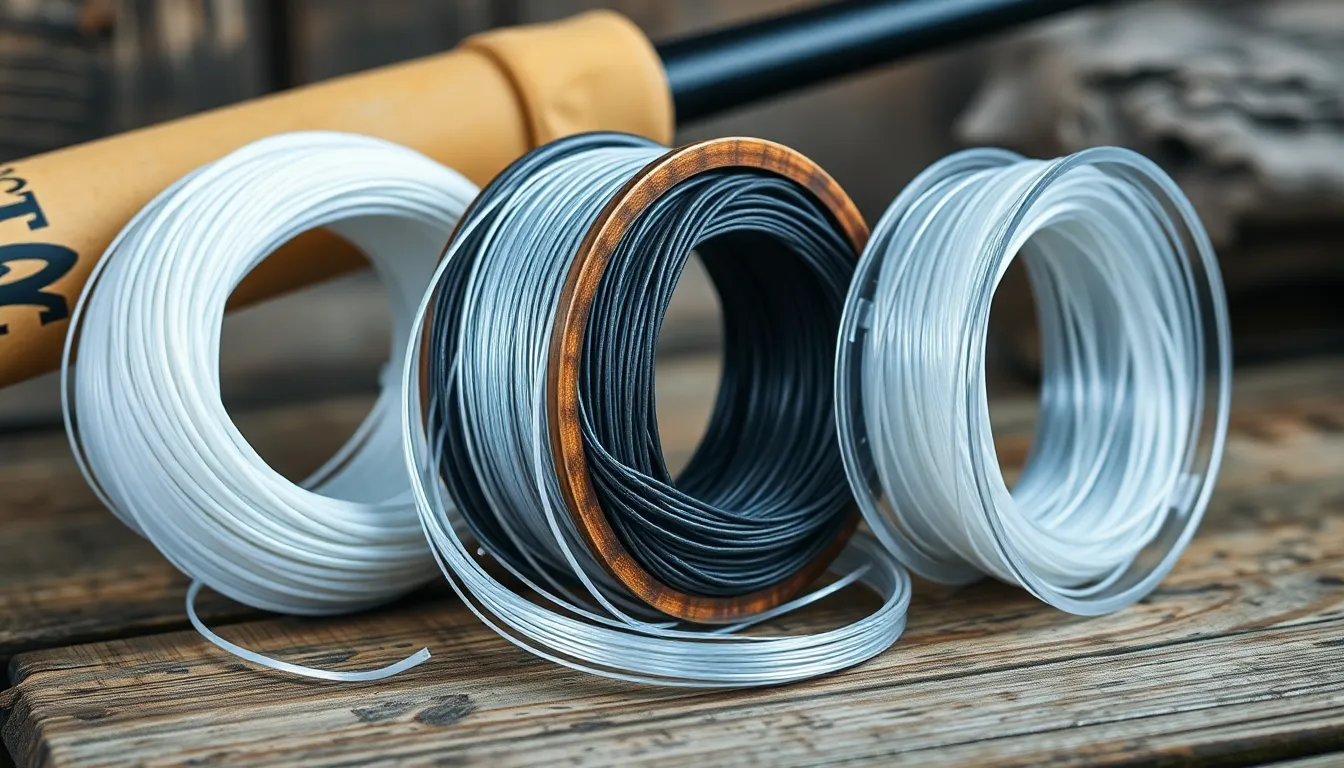
Strong fishing lines come in various types, each suited for different fishing conditions and target species. Understanding these types helps anglers optimize their experience on the water.
Monofilament Fishing Line
Monofilament fishing line consists of a single strand of material, providing flexibility and versatility. This type offers good knot strength, making it easy to tie secure connections. Anglers appreciate its shock absorption properties, especially when targeting fish that make sudden moves. While it is not as strong as braided line, a 20-pound monofilament line can provide the stretch needed for catching lighter species. Factors like low cost and wide availability make it a popular choice among beginners.
Braided Fishing Line
Braided fishing line features multiple strands woven together, resulting in enhanced strength and sensitivity. Its thin diameter allows for easy casting and reduces wind resistance. A 40-pound braided line often generates equal strength compared to thicker mono options. Durability is another significant advantage, as braided lines excel against abrasion from rocks and structure. This type is particularly suited for catching larger species in heavy cover, thanks to its impressive strength-to-diameter ratio.
Fluorocarbon Fishing Line
Fluorocarbon fishing line is designed to be nearly invisible underwater, making it ideal for clear water fishing. Its unique properties reduce light refraction, which helps fish to avoid detection. Anglers value its abrasion resistance when dealing with sharp rocks or oyster beds. Although a bit stiffer than monofilament, fluorocarbon provides excellent sensitivity, allowing anglers to feel even subtle bites. It’s often used as a leader line, complementing other line types for better overall performance in various fishing scenarios.
Advantages of Using Strong Fishing Line
Strong fishing line offers several pivotal benefits that enhance an angler’s experience on the water. Increased durability and enhanced sensitivity are two significant advantages that make strong lines indispensable.
Increased Durability
Durability is essential for a successful fishing outing. A strong line withstands wear and tear, especially when navigating obstacles like rocks and submerged vegetation. For instance, braided lines excel in harsh conditions due to their construction, which resists fraying. Monofilament also shows impressive durability but has a different set of characteristics. While it has good stretch properties, this can lead to weakening over time. Planning for tough fishing environments often includes choosing a line that combines strength with durability. Anglers benefit from this enhanced durability by minimizing the chances of line failure during critical moments.
Enhanced Sensitivity
Sensitivity plays a crucial role in detecting bites. Strong fishing lines communicate more effectively with the angler. Braided lines often offer superior sensitivity thanks to their thin diameter, allowing for better contact with the fish. Monofilament, while more forgiving in terms of stretch, may not provide the same level of tactile feedback. Anglers who prioritize sensitivity often notice subtle nibbles easier and respond quickly. Effective sensitivity also aids in precise hook setting, enhancing the chances of securing a catch. By selecting strong fishing lines, anglers improve their responsiveness and overall fishing success.
Factors to Consider When Choosing Strong Fishing Line
Choosing the right fishing line involves several critical factors. Understanding these elements ensures anglers select an optimal line tailored for their specific fishing needs.
Line Diameter
Line diameter plays a pivotal role in overall performance. Thinner lines cut through water more effectively, reducing drag and improving casting distance. A braided line’s small diameter allows for a high strength-to-weight ratio. In contrast, monofilament lines have a greater diameter, which may affect stealth in clear waters. Matching line diameter to targeted species is vital; heavier fish may require thicker lines to avoid breakage during combat. When targeting larger fish in heavy cover, opting for a low diameter braided line proves beneficial for both strength and versatility.
Test Weight
Test weight represents the maximum load a fishing line can sustain before breaking. Anglers should be aware that this number reflects the line’s strength under ideal conditions. For example, a 40-pound test line can handle substantial stress, but environmental factors can influence real-world performance. Selecting a test weight that aligns with targeted species and fishing style is essential. Using a line rated higher than the expected fish weight offers added security. For instance, an angler targeting bass may choose a line rated for 20-30 pounds to optimize performance while accommodating larger catches.
Stretch and Sensitivity
Stretch and sensitivity significantly impact an angler’s ability to feel bites. Monofilament lines exhibit more stretch, which can help absorb the shock of a fighting fish. However, this stretch can reduce sensitivity, making it harder to detect subtle nibbles. Braided lines, with minimal stretch, offer enhanced sensitivity, allowing for rapid feedback when a fish bites. Choosing a fishing line that balances stretch and sensitivity is essential for effective angling. Anglers often opt for braided lines for their sensitivity, while monofilament may be preferred in scenarios where shock absorption is crucial. Overall, understanding these factors enhances the fishing experience, leading to better results.
Concluzie
Choosing the right strong fishing line is vital for any angler aiming to improve their fishing success. With options like monofilament braided and fluorocarbon each offering distinct advantages understanding these materials can make a significant difference. A strong fishing line not only enhances durability and sensitivity but also allows anglers to tackle various environments and target larger species effectively.
By taking into account factors such as tensile strength and abrasion resistance anglers can make informed decisions that align with their fishing goals. Ultimately a strong fishing line is an investment in a more rewarding fishing experience.


 Romanian
  English