

Surf fishing is like a thrilling treasure hunt where the ocean is both your playground and your partner in crime. Picture this: the sun rising over the horizon, waves crashing at your feet, and the thrill of reeling in a catch that might just be the biggest fish story you’ll ever tell. But before you dive headfirst into the surf, it helps to have a few tricks up your sleeve.
Cuprins
Surf Fishing Tips
Choosing the right location significantly impacts success. Look for areas with consistent waves and structures such as sandbars or jetties. Fish often gather around these structures, so targeting these spots increases catch potential.
Using appropriate gear enhances the fishing experience. Equip a surf rod between 10 to 12 feet in length. Pair it with a high-capacity reel capable of holding at least 200 yards of line. Select a monofilament or braided line rated for at least 15 to 30 pounds.
Bait selection matters greatly. Live bait, such as sand crabs or mullet, often attracts various species like striped bass or flounder. Artificial lures can also be effective, especially during active feeding periods.
Understanding tides and conditions is essential. Fish activity correlates with tidal movement; focus efforts during the incoming and outgoing tide. Early mornings and late afternoons yield the best results as fish are more active.
Casting techniques contribute to overall effectiveness. Practice overhead casting to cover a larger area. Release the line just before the rod tip reaches its highest point for better distance.
Maintaining patience is key. Surf fishing requires time and persistence; a quick bite is not guaranteed. Stay alert and ready for action, as bites can come unexpectedly.
Respecting local regulations supports sustainable fishing. Check for size and bag limits before heading out. Following these rules ensures a balanced ecosystem and preserves fishing opportunities for everyone.
Echipamentul de care aveți nevoie
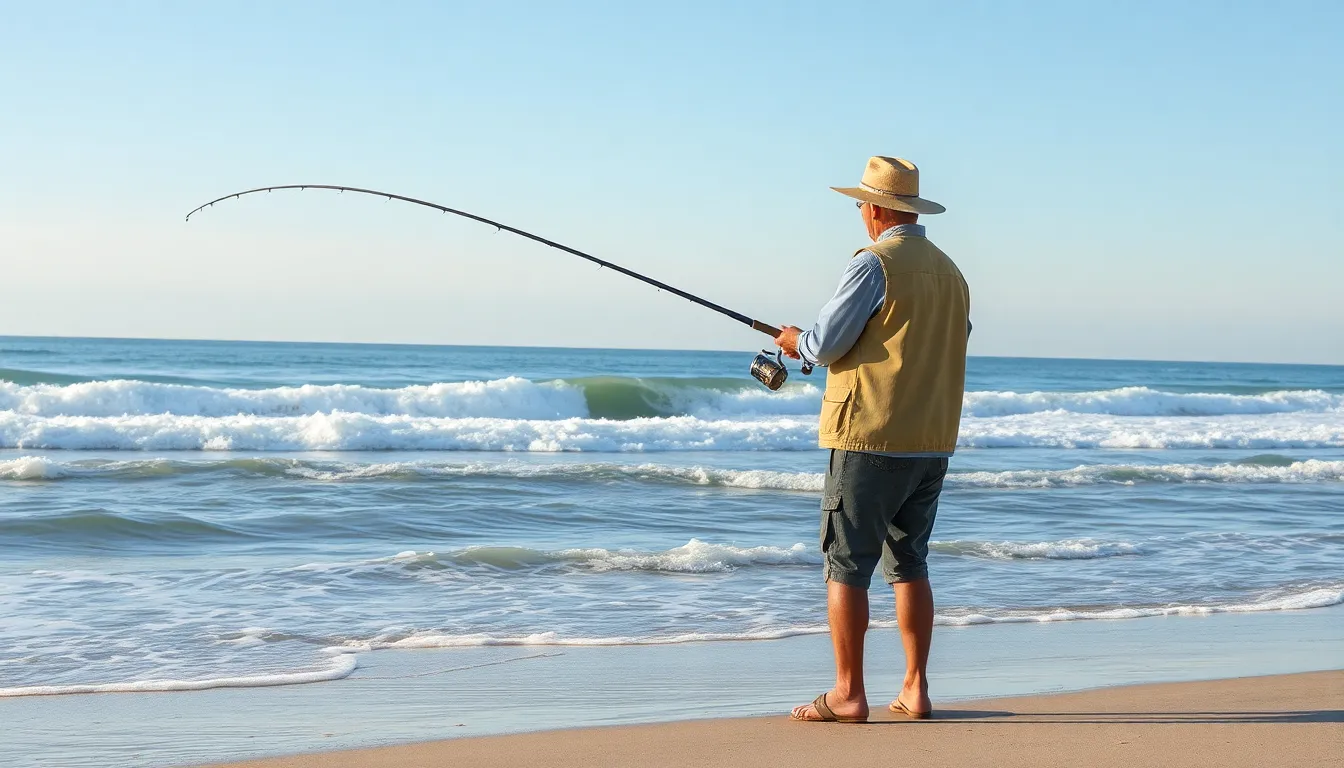
Selecting the right equipment is crucial for successful surf fishing. The correct gear significantly enhances the overall experience.
Fishing Rod and Reel
A surf rod between 10 to 12 feet offers the reach necessary for casting beyond breaking waves. Medium to heavy action rods handle larger fish effectively. Pairing the rod with a high-capacity spinning reel ensures ample line capacity for fighting fish. Reels with a drag system provide control during a catch. Look for a reel with a gear ratio above 4:1 for quicker line retrieval. Opt for braided line with at least 20 to 30-pound test for strength and sensitivity.
Tackle and Lures
Selecting suitable tackle improves chances of catching fish. Use a variety of hooks, such as circle hooks or J hooks, suitable for different bait types. Swivels prevent line twisting during retrieval. Popping corks can enhance visibility and attract fish. Lures like spoons, jigs, and soft plastics simulate baitfish movement. Adjust lure colors based on water clarity. Popular choices include bright colors in murky water and natural hues in clear conditions.
Alegerea locației potrivite
Selecting the right location is crucial for a successful surf fishing experience. Several factors determine the best spots along the beach.
Beach Conditions
Areas with consistent waves and structures greatly influence fish activity. Look for sandbars, rocks, or jetties, as these natural formations attract baitfish. Clean, sandy beaches with breaking waves often offer optimal conditions. Observing local fishing reports can provide insights into which areas yield good results. Always avoid overcrowded spots, as fishing pressure can diminish success rates.
Tides and Currents
Tidal movements play a vital role in fish foraging habits. Incoming tides typically stimulate feeding activity, while outgoing tides can hold fish in specific locations. Pay attention to the tide charts for the region, noting the best times for fishing. Strong currents may be challenging but often position fish near structures. Timing your fishing sessions with favorable tide conditions can significantly increase catch potential.
Bait Selection
Bait selection plays a vital role in surf fishing success. Choosing the right bait can attract various fish species swimming close to shore.
Live vs. Artificial Baits
Live bait often yields impressive results. Sand crabs, shrimp, and mullet attract many popular species through their natural movements. Artificial baits provide a versatile alternative. Lures such as spoons, jigs, and soft plastics mimic the appearance of prey, appealing to predatory fish. Each bait type serves its purpose, so utilizing both may increase overall effectiveness, especially during active feeding times.
Best Baits for Surf Fishing
Some baits consistently prove effective for surf fishing. Cut bait, made from species like mackerel or mullet, offers scent and visibility in the water. Sand fleas, found along sandy beaches, also attract prominent surf species. Clams and shrimp provide additional options, appealing specifically during certain seasons. Using a variety of baits increases the likelihood of enticing fish, particularly in coastal regions with diverse species.
Techniques for Successful Surf Fishing
Successful surf fishing relies on effective techniques. Mastering these methods enhances both catch rates and overall enjoyment.
Casting Techniques
Accuracy remains crucial in surf fishing. Using an overhead cast allows for distance and precision, especially when targeting fish beyond breaking waves. Anglers often recommend practicing the pendulum cast for maximum distance when the surf conditions demand it. Adjusting the weight of the sinker can improve casting performance, with heavier weights needed during windy conditions. Varying the speed of the retrieve can also attract more fish, as it mimics natural bait movement. Finally, maintaining a steady rhythm can enhance control and reduce tangles during the cast.
Reading the Water
Reading the water increases the chances of a successful catch. Observing wave patterns helps identify where fish are likely to congregate. Look for rip currents, as they often indicate deeper channels where fish forage. Sandbars and troughs act as natural fish highways, while aggressive waves might stir up bait fish. Recognizing color changes in the water also signals potential fishing hotspots, as this can indicate areas rich in nutrients. Paying attention to bird activity can indicate the presence of bait fish and, in turn, larger predator fish.
Concluzie
Surf fishing offers a unique blend of adventure and tranquility that can lead to memorable experiences. By applying the tips shared in the article, anglers can optimize their chances of success while enjoying the beauty of the ocean.
Choosing the right location, utilizing appropriate gear, and mastering casting techniques are vital. Additionally, understanding tides and selecting effective bait can significantly enhance the overall experience.
With patience and respect for local regulations, anyone can embark on a rewarding surf fishing journey. Each outing presents an opportunity to learn and connect with nature, making it a worthwhile pursuit for both novice and seasoned anglers alike.



 Romanian
  English